
Family Ice Fishing Trip in Minnesota: 2026 Guide
Table of Contents
Why Minnesota Is the Easiest Family Ice Fishing Trip You'll Ever Plan
Minnesota Ice Fishing Packages: What's Actually Included
Day Houses vs. Sleeper Houses vs. Resort Cabins
What a Family Should Actually Compare Before Booking
Guided Trips vs. DIY Fish House Rentals
Questions to Ask Any Operator Before You Put Down a Deposit
Ice Fishing Safety for Kids: What Parents Need to Check Before Booking
What to Wear Ice Fishing in Minnesota (Kid-by-Kid Checklist)
The Best Time of Day to Ice Fish in Minnesota With Kids
Walleye, Sauger, and Northern Pike: What Families Actually Catch
Costs, Licensing, and Booking Logistics for a Family Trip
Licensing: Who Needs What
How to Build a Realistic Trip Budget
Booking Logistics That Trip Up First-Timers
A Simple Family Trip Checklist
Frequently Asked Questions
Last Updated: October 14, 2026
Why Minnesota Is the Easiest Family Ice Fishing Trip You'll Ever Plan
An ice fishing trip for families in Minnesota is the rare winter outing where the hard part ends when you park the car. The state's ice fishing regulations and season information allow anglers to fish through the ice well into late winter on many lakes, and a network of outfitters has turned a once-rugged hobby into something a seven-year-old can enjoy with mittens on.
At Trophies Only, LLC, we run guided ice fishing adventures on Lake of the Woods, and we've watched how quickly kids forget the cold once a walleye shows up on the sonar. This guide covers packages, safety, clothing, timing, and costs.
Here's what most families don't realize until they're on the ice: the fish house does almost all the work.
Key Takeaway The single biggest factor in whether kids enjoy ice fishing is the shelter, not the fishing. A heated house over productive water keeps everyone comfortable long enough for the bite to happen.
Minnesota Ice Fishing Packages: What's Actually Included
A Minnesota ice fishing package bundles shelter, gear, and often guiding into one booking. Most fall into four categories, and the right one depends on whether you want a day trip or overnight, how far you'll drive, and how much work you want done for you.

Day Houses vs. Sleeper Houses vs. Resort Cabins
A day house is a heated fish house rented for a set number of hours, usually the core of the morning or afternoon bite.
A sleeper house doubles as lodging: you fish through the floor, cook on a stove, and sleep on bunks in the same heated space.
Resort cabins sit on shore with a bed, shower, and kitchen, with fishing access a short walk or ride away.
Option | Overnight? | Best For | Gear Included |
Day house | No | Younger kids, day trips | Usually rods and bait |
Sleeper house | Yes | Families with older kids | Rods, bait, heat, bunks |
Resort cabin | Yes | Families wanting full lodging | Varies by property |
Guided package | Either | First-timers, groups | Everything, plus a guide |
What a Family Should Actually Compare Before Booking
Package names vary by operator, so compare the same five things:
Sleeping capacity and bunk layout. A house that sleeps six adults may sleep four comfortably once kids claim floor space. Ask how many bunks are full-size versus twin.
Heat source and backup. Propane forced-air is most common. Ask whether there's a backup heater and whether the house holds temperature overnight in a cold snap.
Cooking setup. Some sleepers include a stove and oven; others are bring-your-own. Confirm you can boil water and reheat food indoors.
Restroom situation. The question families ask last and care about most. Options range from an on-board portable toilet to a nearby shore facility to nothing.
Guided Trips vs. DIY Fish House Rentals
Guided trips put a licensed captain or experienced angler in charge of locating fish, drilling holes, and rigging lines, removing the guesswork that turns a fun morning frustrating.
DIY rentals cost less and give you total control of your schedule, but you're responsible for finding fish, not trivial on a big body of water. A guide's value shows fastest when the bite is slow, because they can move the house to different depth or structure instead of waiting it out.
Pro Tip If you're booking your first family trip, pay for the guided option once. Watching a guide read the sonar, set depths, and move the house teaches you more in one morning than a season of trial and error.
Questions to Ask Any Operator Before You Put Down a Deposit
A short phone call separates a family-friendly operation from one that mostly serves adult groups:
How many kids do you typically host, and what ages?
Is there a minimum age for overnight sleepers?
What happens if ice conditions force a cancellation or a move to a different lake?
Are life jackets available in children's sizes, or should we bring our own?
Operators who answer these quickly and specifically have hosted a lot of families. Vague answers are a signal to keep looking.
Ice Fishing Safety for Kids: What Parents Need to Check Before Booking
Ice fishing safety for kids comes down to three checks: ice thickness, shelter heating, and supervision.
NorthernSeclusion
The Minnesota Department of Natural Resources ice safety guidelines recommend minimum ice thickness thresholds for foot traffic and vehicles, and any reputable operator follows them.
For families, the practical checklist looks like this:
Confirm the operator checks ice thickness before every trip
Ask whether the sleeper house has a carbon monoxide detector and ventilation
Make sure every child has a properly fitted life jacket for any open-water transition
Pack a fully charged phone and share your location with someone at home
A heated house is wonderful, but it's also an enclosed space with a fuel source. Ventilation and a working detector matter as much as warmth.
Watch Out The most common family mistake is treating a heated house as a babysitter. Kids still need an adult watching the holes, the door, and the heater at all times. A door left open in single-digit temperatures chills the house fast, and unattended heaters are a real hazard.
What to Wear Ice Fishing in Minnesota (Kid-by-Kid Checklist)
What to wear ice fishing in Minnesota decides whether your kids last two hours or six.
Dress each child in a base layer that wicks moisture, a mid layer that traps heat, and an outer layer that blocks wind.
Base layer: moisture-wicking thermal top and bottom, not cotton
Mid layer: fleece or wool sweater and fleece-lined pants
Outer layer: insulated, windproof jacket and snow pants
Feet: wool socks plus insulated, waterproof boots rated for deep cold
Hands: liner gloves under waterproof mittens, plus a spare pair
Bring one more layer than you think you need for each kid. It's easier to shed a fleece than to manufacture warmth on a frozen lake.
The Best Time of Day to Ice Fish in Minnesota With Kids
The best time of day to ice fish in Minnesota is the low-light window around sunrise and sunset, when walleye and sauger feed most actively.
Fish activity follows light levels: on most lakes, the first two hours after sunrise and the last two before dark produce the most action, while midday slows, exactly when younger kids get restless.
Teenagers who can handle a longer day may do well on the evening bite. With elementary-age kids, book a morning slot, fish hard for three or four hours, and call it a win.
Pro Tip Ask your outfitter to position the house before you arrive. Walking into a pre-warmed sleeper house at 7 a.m. with holes already drilled is a completely different experience for a child than standing in the cold waiting for setup.
Walleye, Sauger, and Northern Pike: What Families Actually Catch
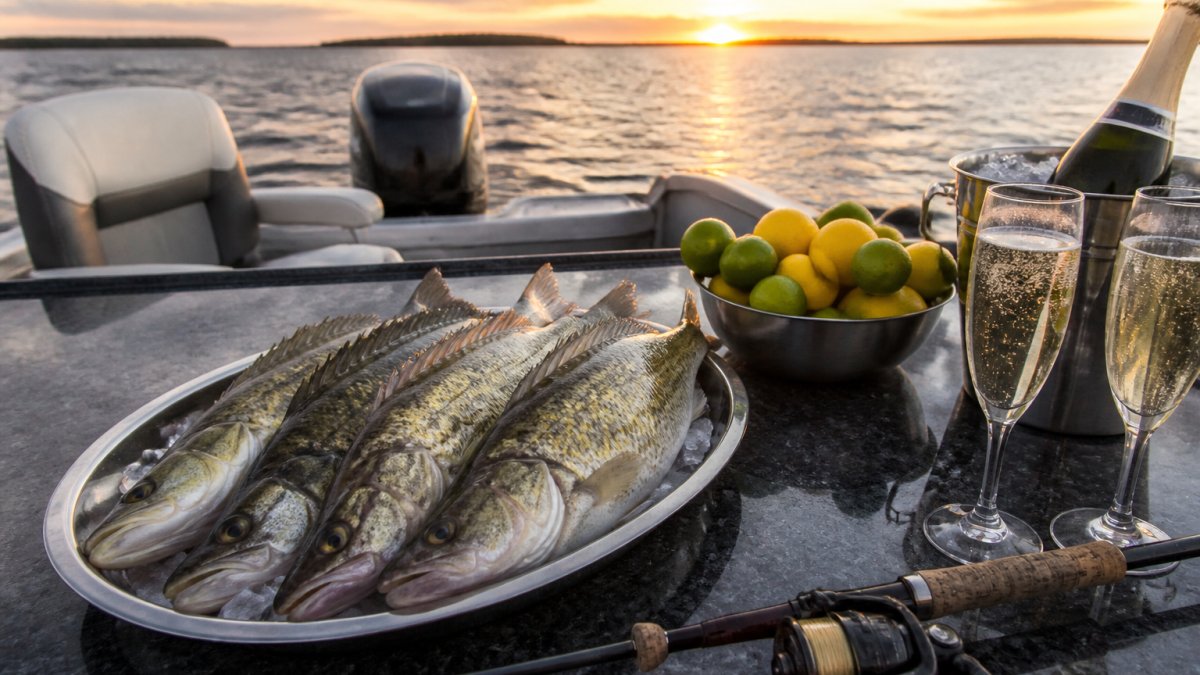
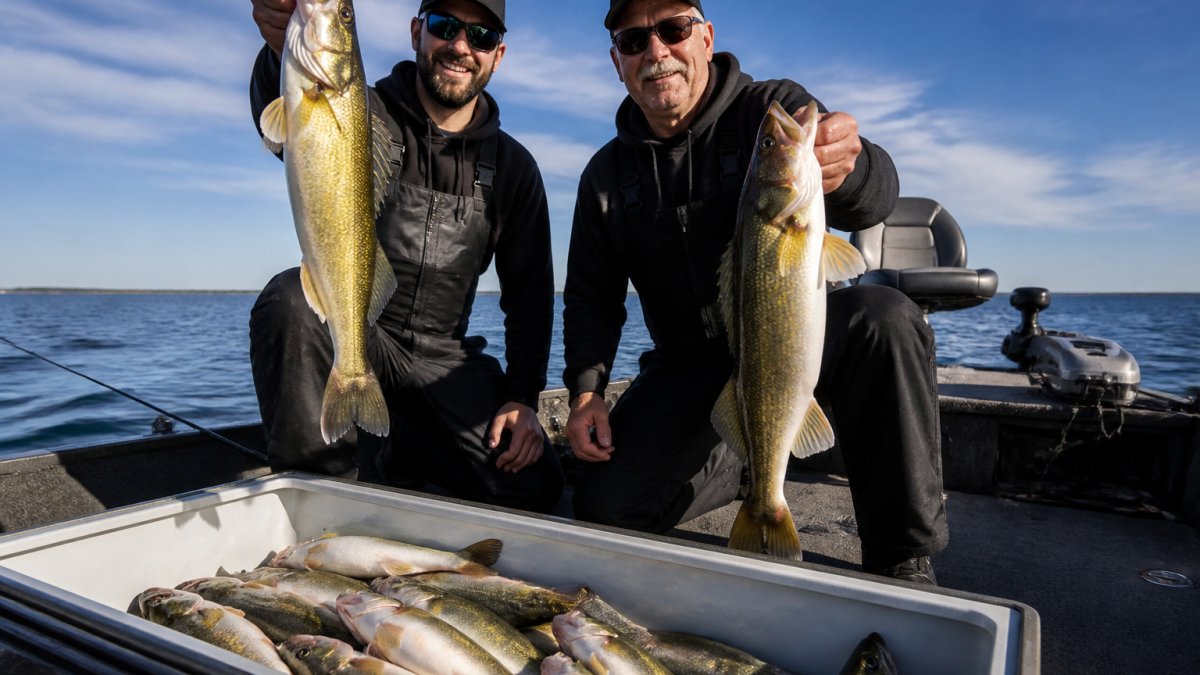
Walleye, sauger, and northern pike are the three species families catch most often through the ice in Minnesota.
Walleye are the marquee catch and the reason many families book.
Sauger look similar to walleye and often share the same water. They're smaller on average but just as willing to bite, perfect for kids who need frequent action.
Northern pike are the crowd-pleaser: aggressive, large, and a fight a child will remember.
Best For Families with kids aged 8 and up who want variety. A mixed bag of walleye, sauger, and pike keeps everyone engaged, and the chance at a big pike gives the trip a story.
Costs, Licensing, and Booking Logistics for a Family Trip
Costs, licensing, and booking logistics are where a family trip either comes together smoothly or turns into a scramble. Here's a framework for budgeting without quoting rates that change by season and operator.
Licensing: Who Needs What
Every angler age 16 and older needs a valid license, and Minnesota fishing license information outlines resident and nonresident options, including short-duration licenses that make sense for a single weekend trip. Kids under 16 generally fish free when accompanied by a licensed adult. Buy licenses online before you travel, since cell service on the ice can be unreliable and you don't want to spend your first hour in town tracking down a license agent.
How to Build a Realistic Trip Budget
Rather than quote a number that won't match your dates, build your budget from these line items. Ask each operator for current rates in writing, then total it up:
Lodging or shelter. Day house rental, sleeper house for one or two nights, or a resort cabin. The largest line item, and the one that varies most by season and weekend versus weekday.
Guided add-on. A guided trip typically costs more than a self-guided rental, but usually includes gear, bait, and fish-locating expertise you'd otherwise supply yourself.
Licenses. One per angler 16 and older. Short-duration licenses are usually cheapest for a single trip.
Meals and snacks. Sleeper houses with a stove let you cook, which cuts cost. If you're eating at a resort restaurant or in town, budget accordingly.
Gear you don't own. Rods, bait, and tip-ups are often included in packages. If not, plan to rent or buy.
Key Takeaway Weekday trips in early and late season are consistently the cheapest and least crowded. Peak weekends in January and February carry the highest rates and the tightest availability.
Booking Logistics That Trip Up First-Timers
Book early for peak weekends. Good sleeper houses fill fast in January and February, sometimes months out.
Confirm transportation to the ice. Some access points require a tracked vehicle, airboat, or snowmobile tow you don't own. Ask whether it's included or an added charge.
Get the inclusions list in writing. Ask specifically about rods, bait, food, bedding, towels, and cooking equipment. "Fully equipped" means different things to different operators.
Check the cancellation policy. Ice conditions can change. A flexible operator will work with you on a reschedule rather than leave you stranded.
Plan your arrival window. Ask when you can check in, when the house will be warm, and whether holes will already be drilled.
A Simple Family Trip Checklist
Licenses purchased for every angler 16 and older
Lodging or shelter booked and confirmed in writing
Transportation to the ice confirmed
Gear inclusions confirmed (rods, bait, tip-ups, bedding, cookware)
Layered clothing packed for each child, plus one spare layer
Frequently Asked Questions
How much does a family ice fishing trip in Minnesota cost?
Total cost depends on your package, group size, dates, and whether you book a day house, sleeper house, or guided trip. Add Minnesota fishing license fees for adults, plus food and travel. Guided family ice fishing trips bundle heated shelter, gear, and local expertise into one rate, which often works out cheaper than piecing together rentals, bait, and equipment on your own. Check the operator's website for current package pricing and kids' discounts.
What should kids wear for an ice fishing trip?
Dress kids in moisture-wicking base layers, fleece or wool mid-layers, and a windproof insulated outer layer. Add waterproof boots rated for below-zero temperatures, two pairs of wool socks, insulated gloves or mittens with liners, and a warm hat that covers the ears. Pack a spare set of gloves and socks per child. Hand warmers in pockets help on windy days, and a neck gaiter protects exposed skin during travel between the vehicle and the fish house.
Do families need to bring their own ice fishing gear?
Most guided ice fishing packages include rods, reels, bait, and electronics, so families only need personal cold-weather clothing and snacks. If you rent a bare fish house, plan to bring or rent rods, tackle, an auger, and a depth finder. Confirm what the operator provides before booking, especially for kids, since child-sized rods make jigging easier for smaller hands and reduce frustration during a long day on the ice.
What safety precautions should families take on the ice?
Book with an operator who checks ice thickness daily. Minnesota Department of Natural Resources guidelines recommend at least 4 inches of clear ice for foot travel, but guided operators track conditions continuously and use amphibious vehicles or tracked transports to move groups safely. Keep kids within arm's reach, avoid pressure ridges, and confirm the operator has emergency communication and first-aid gear before you book.
Get Started Today

Comments